
Deformability Cytometry
MAINSTREAM is divided into two distinct stages: prevention of mesenchymal stem cell (MSC) ageing by designing materials that target specific mechanobiological pathways, and mass production of MSCs whilst aiming to keep the cells multipotent long term. For both stages, state-of-the-art techniques are explored to better understand the impact of newly developed processes and materials on stem cells. One such technique is Real-Time Deformability Cytometry or RT-DC.
RT-DC is a label-free microfluidic/flow cytometry technique which tests the mechanical phenotype of cells at high throughput. In this technique, cells flow through a channel of pre-defined width (typically a few microns, similar to the size of cells), experiencing controlled hydrodynamic forces that temporarily deform the cell. The resulting shape changes are monitored at the single cell level using high-speed imaging and real-time analysis for rapid screening.
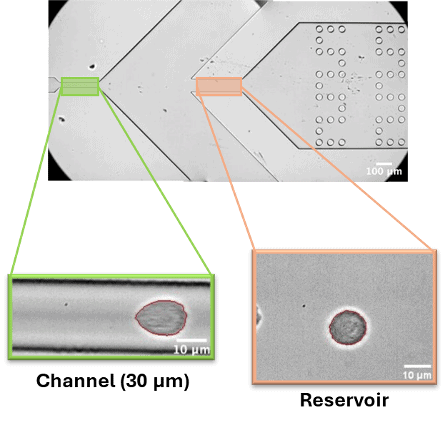
RT-DC has already shown a high level of sensitivity to various processes applied to MSCs, such as changes in the substrate, chemical or mechanical stimuli, which alter the cellular phenotype. As a result, it may be possible to use the mechanical readout from cells in culture as a new approach to assess their phenotype and provide a better understanding of the cellular response from the materials and process innovations developed during MAINSTREAM. RT-DC can also provide an interesting avenue for bioprocessing quality control; by being able to analyse thousands of cells per second, RT-DC provides a label-free, contactless and high throughput method for screening cell differentiation and health.
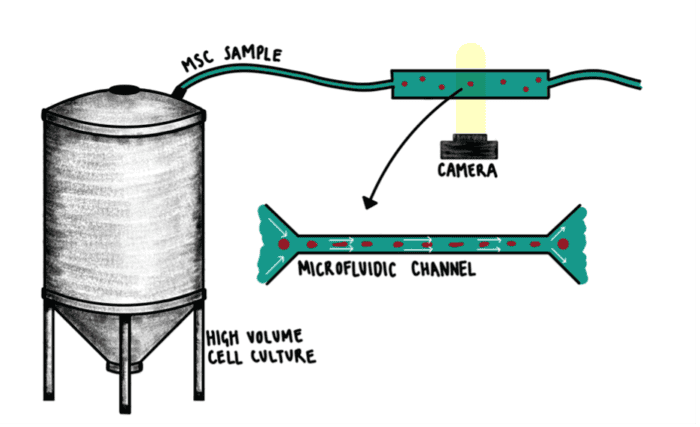
Translationally, the reliable high throughput mechanical testing of MSCs could unlock faster testing and screening of MSC batches, flag population drifts in real time reliably and accurately, and shorten the characterisation of new technologies to be developed for clinical MSCs mass manufacturing.
Mainstream is a collaboration between three world-class academic institutions and the UK National Health Service.